Monday, January 20, 2020

Dora And The Lost City Of Gold Surprises As A Fun Family-Friendly Adventure That Cleverly Reimagines It's Source Material


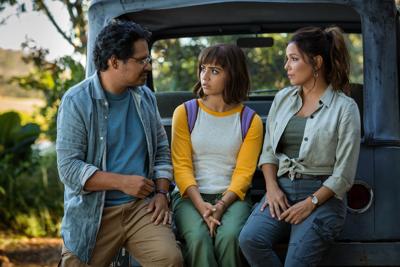
      In an era where the majority of films released are generally comic-book and franchise-oriented, its nice to see a film that aims to be neither other than just a charming family-friendly adventure, that not only entertains but manages to retain the youthful spirit of its classic source material. Based on the popular Nickelodeon television series titled Dora The Explorer, the film takes place after the events of the television series with young newcomer Isabela Moner in the lead role as Dora followed by a strong supporting cast that includes Eva Longoria, Michael Pena, and Eugenio Derbez. First announced as a live-action film in 2017, the film received its release in the United States on August 9th 2019 under the distribution of Paramount Pictures. The film not only received generally positive reviews from critics but ended up grossing $119 million worldwide, proving to be a success in terms of revitalizing the brand of the show. As a continuation of its source material, Dora And The Lost City Of Gold proves to be a worthy companion piece to the television show while reintroducing both its story and characters to a new generation of audiences.


      The story for Dora And The Lost City Of Gold centers around the character of Dora (Played by Madelyn Miranda as a young girl followed by Isabela Moner as a teen), an adventurer at heart being sent from her jungle home to the city. While staying in the city, she struggles to grasp the complexities of human interactions in an urban environment. She soon finds himself along with her new group of friends being forced back into the jungle in order to rescue her parents from unsavory characters. What seemed like a film destined to fail ultimately turned out to be one of last summers surprise hits, that's both fun to watch while carrying with it doses of heart and charm. The film literally makes audiences feel like young children again with a message that says young kids should be themselves and not choose to be something they aren't. The film doesn't take itself too seriously  as it's designed to appeal to young audiences with cringe-inducing moments, that come along with its fun-spirited nature. Given that the animated show debuted a total of 20 years prior to the release of the film, Dora And The Lost City Of Gold works very well at paying homage to the past while both serving as a parody of the concept, along with reintroducing it to a new generation of young audiences.

Image result for dora the lost city of gold movie pics

      One of the key elements that makes this film work so well is the strong chemistry within its cast of young actors combined with the talents of its adult performers. As far as the acting performances go, Isabela Merced is perfect casting as Dora with her brilliantly conveying her characters social awkwardness as well as her passion for the jungle. She proves to be perfect casting for the main character with both her performance and character being the heart of the film. Jeffrey Wahlberg shines as Dora's cousin Diego, he does a good job of making the audience dislike his character at first with the way he mistreats Dora due to his characters attempts at fitting in with the popular kids in High School. Nicholas Coombe and Madeleine Madden both deliver impressive performances as Dora's friend Randy with Madden having the stronger character of the two as Dora's classmate rival turned friend and love interest to Diego, Sammy. In terms of supporting roles from the older cast, Michael Pena and Eva Longoria work well together playing Dora's parents with both actors adding to the films humor and child-like style. Eugenio Derbez also proves to be effective as the films main antagonist Alejandro, a man claiming to be a friend of Dora's parents but later is revealed to be associated with the mercenaries. The cast as a whole delivers in terms of making the audience care about their characters along with showcasing strong chemistry as an ensemble. The chemistry between the youth actors are spot on and feel natural with the older actors adding both fun and realism to the story. Truth be told, the film wouldn't have turned out as well as it did had the cast not been cleverly put together.


      Another element that makes the film work outside of the performances is the style and tone of the story. The directing by James Bobin proves to be serviceable with the film attaining the right family-friendly style of goofiness mixed with cheese. What makes it so effective with young audiences is the fact that the film never takes itself seriously and plays off childlike imagination, while also finding ways to put a smile on adults faces. Bobin directs the film with it having full knowledge of its past origins, while embracing the absurdity of its concept to maximum potential. Add to that solid cinematography, an exotic jungle location that boasts noteworthy art-set decoration, and a well-balanced pace that moves the film fairly quick without it feeling too rushed nor too slow, Dora and The Lost City Of Gold has the perfect balance of strong acting, directing, writing, and technical elements to make its story come to life in a way that ultimately makes it a fun and enchanting experience for audiences.


      The films screenwriting by Nicholas Stoller and Matthew Robinson deserves points for attempting to be clever while creating a young teenage atmosphere with the story. The jokes for the most part are either hit or miss with the majority landing as hits rather than misfires. The film has the feel of an adventure flick from the 80's mixed with a children's film from the 90's era, making it feel like a kid friendly version of Crocodile Dundee with Dora's character having the same socially awkward presence of Paul Hogan's character when brought into normal society, but remains at the top of their game when returning to their natural habitat. For young audiences, they'll find enjoyment with the story as it has much to offer as being enjoyable. For others though, the story can come across as being cheesy and problematic in certain areas. The character of Dora can either be appealing to audiences with her characters authenticity and desire to bring about change, while also annoying audiences with her constant flow of information regarding facts about the jungle with her insightful naivety. Her character is the heart and soul of the film because of how she's ultimately able to overcome her obstacles both physically and mentally while making friends. Despite Dora's character being socially awkward when she's not in the jungle, her ability to overcome that by the films end serves as being both a hopeful and encouraging model to young children facing similar scenarios minus the jungle action. The side characters are well-balanced and developed fairly well to the point where they feel neither like cardboard cutouts of teen characters, but also don't carry any significant character growth with just enough to bring their characters to life like Dora's. It wouldn't be a complete teen flick without the generic romantic subplot involving Diego and Sammy. The script plays off both the typical and cliched subplots of the young kid friendly genre of films it borrows from along with adventure ones (Hence the subplot involving Alejandro being the so-called friend of Dora turned villain), weaving all the elements of both genres together to bring Dora's story to life in live-action form. The moments where the movie transforms into full-blown animation mode with the characters, are among the films main highlights with the audience getting a taste of nostalgia with impressive animation. While the writing for the film isn't by any means perfect, it manages to overcome it's moments of cheesiness and deliver a fun and appealing young adventure flick that has shades of Indiana Jones, National Treasure, and Tomb Raider thrown into the mix, serving as the scripts strongest aspects along with the strong characterization of Dora.


      What could've easily ended up being a forgotten misfire and box office failure turns out to be one of 2019's surprise hits in terms of actually being a decent film, that's enjoyable for families looking for a break from all the Marvel stuff. The film is well-intentioned and carries with it a strong message for young children, which says that anything is possible if one believes in themselves. The film despite the action-adventure aspect of it's story, is very much about loneliness, acceptance, risk-taking, fitting in, and making friends. These are all themes that speak to young people with the film ultimately projecting a positive message onto them. What separates Dora And The Lost City Of Gold from other films with similar structures is it's heart. It desires to provide fun and adventure for the entire family, while also instilling a meaningful message for today's youth. It also serves as a genius way to bring in a new generation of audiences into the universe of Dora The Explorer. As far as family-friendly adventures go, Dora And The Lost City of Gold is one of the better ones to come out in recent times as well as being one of 2019's surprise hits. It is a film that one doesn't expect much from in terms of actually being decent but ultimately surprises with it's quality.

Final Verdict: For fans of the classic Nickelodeon show as well as those looking for a fun family-friendly adventure with a good message, Dora And The Lost City Of Gold is worth watching.


Wednesday, January 8, 2020

Ford v Ferrari Excites, Informs, And Thrills Audiences With Both It's Action And Heart


      With the 2019 winter movie season underway, not only does it come with a batch of holiday-oriented films aimed at achieving box office glory, but also films designed to achieve award season recognition. With Ford v Ferrari, the film aims to not only achieve that stature but also work as a triumphant sports action drama. Premiering at the Telluride Film Festival on August 30th, 2019, the film later received its US theatrical release on November 15th 2019, grossing a total of $206 million worldwide. Along with the films box office success, it landed on the National Board Of Reviews top ten best movie list of the year with Christian Bale receiving a Best Actor nomination at the Golden Globes. Having seen Ford v Ferrari, the film is most deserving of its praise as the story is well-told with strong performances from both Matt Damon and Christian Bale in the lead roles, along with impressive race car sequences. As an American sports drama, Ford v Ferrari hits all the right notes despite the films excessive running time.


       The story for Ford v Ferrari centers around the true story of an American car designer Carroll Shelby (Played by Matt Damon) and a British mechanic/ driver Ken Miles (Played by Christian Bale), who developed the famous Ford GT40 Mark ll in 1966 to beat the indomitable Team Ferrari in the 24 Hours of Le Mans race. With a story like Ford v Ferrari, the film is a slick combination of history mixed with thrilling race car sequences combined with top notch performances from it's main stars. The film delivers on the action aspect of it's story involving intense racing sequences, including shots of race cars being flipped over or crashing, with those moments being balanced by others containing gripping human drama. The film aims for two audiences, the first being race car enthusiasts and those knowledgeable of their history with the second being those who are non-racing enthusiasts looking for a film, that has both powerful drama and action. Given that the film aims for both audiences, it does a very good job of being appealing enough to cater to both sides. Whereas the story is solid, it's the performances of the main stars that make the film as strong as it comes across as being. Ford v Ferrari is a well-executed drama about overcoming opposition, politics, and exploitation in the Ford Company. The film emphasises the unusual partnership of Carroll Shelby and Ken Miles, who went against the odds to succeed in developing the only American car to win at Le Mans.


       The partnership turned friendship between Carroll and Ken serves as being the heart of the film largely thanks to the performances of the main cast. Both Damon and Bale prove to be the duo this film required in order to effectively convey it's story on the big screen. Out of the two leads, Bale is the one that steals the show with delivering a superb performance as Ken Miles in a role that shows him taking control of the story, much like his character takes control of the race track with his impeccable driving abilities. While Bale is terrific, Damon manages to hold his own as Carroll Shelby. Rather than both actors trying to outdo the other, they manage to play their parts the way the roles required them to with both their chemistry as well as their charisma shining through. With the main characters, Bale and Damon effectively show the progression of the characters friendship as the film progresses with the audience becoming fully invested by the films end. One can't imagine a different set of actors playing these parts as Damon and Bale feel like the perfect fits, putting their full charisma on display. As for the films supporting cast, Jon Bernthal shines in his role as Lee lacocca, vice president of Ford. Other notable performances are Tracy Letts as CEO of Ford and grandson of automotive pioneer Henry Ford named Henry Ford ll, Caitriona Balfe as Miles wife Mollie, Josh Lucas in a role thats designed for audiences to automatically hate with him playing Senior executive Vice President Leo Beebe, and Noah Jupe in an impressive minimal role as Bales son Peter Miles. As a whole, the cast does a masterful job of playing their characters, making the story engaging with characters the audience come to both love and dislike. While Josh Lucas and Tracy Letts roles feel like rather generic ones in a typical sports drama despite being based off real people, they still manage to do a fine job of making their characters appealing as well as giving the roles life. While the supporting cast all deliver good performances, it's the performances of Matt Damon and Christian Bale which ultimately make the film an exciting and powerful ride.


      The films directing by Logan director James Mangold is well-handled with the films cinematography being stunning to watch, particularly during the films racing sequences which are breathtaking. Mangold brings a perfect blend of excitement and realism to the story with the narrative remaining straightforward in regards to showing the history behind the race car shown in the movie. The film perfectly blends humor, action, and drama together with the historical aspect of the story. On a visual note, the racing sequences are visually stunning despite running a bit long. The films editing is well-paced to where the film is constantly moving despite it's 150 minute running time. The action sequences are lengthy, but never feel boring with those scenes being brilliantly filmed thanks to the films appealing cinematography. The films score is memorable with the music managing to back up the action with outstanding sound effects to drive the adrenaline of those key sequences involving the races. In terms of the films art-set decoration and costume design, the films sets and cars look authentic with the designs resembling the actual ones. With the directing, James Mangold gives this film the energy and heart it needed in order to make the story believable, as well as appealing to audiences. He does a very good job of crafting a story about friendship and testing ones limits around the basis of technology without the film losing sight of it's main goal, which is to both entertain along with giving audiences a taste of the history behind the Ford race car. In that regard, Mangold succeeds and showcases his pure craftsmanship as a director. He does an exceptional job of handling the films action sequences to the point where the audiences are left biting their nails to see what happens next.


      The films screenplay by Jez and John-Henry Butterworth and Jason Keller is well-written and does a noteworthy job of driving the story on and off the race track. What the films screenplay does so well is despite the story being a autobiography of the two main characters, it takes the time to make their partnership/friendship a personal one that makes it feel less generic but down to earth for the audience to connect with. The audience truly cares about Damon and Bale characters, especially by the films third act with a climax which has the potential to leave a few tear drops in some audiences eyes. The relationship between Carroll and Ken serves as the heart and soul of the film with the history behind the creation of the GT40 Mark ll serving as the backdrop of what started as a bitter rivalry turned genuine friendship. The film also manages to give a well-balanced presentation of the facts surrounding the rivalry between the two automotive companies in the 1960's. Whereas the audience should be disliking the opposite side of Ford in the rivalry, they actually end up disapproving of the corporate powers attempting to keep Bales character from racing or find ways to hold back Carroll and Ken from meeting their goals. The screenwriters succeed at making the complicated friendship between Carroll and Ken at the start a fun one with the two clearly not approving of the other in the beginning with it even leading to a hilarious fight sequence between the two in which they come across as acting like bumbling friends, thanks to both the stellar writing as well as the convincing performances from the main actors. The key to writing the script for this film is time with it being well spent on developing these characters and allowing the audience to become fully invested with both men along with their families and story. The scenes involving Ken with his wife or his son go a long way with getting the audience to gain a sense of the type of person Ken is, and what his dreams are not just for himself but for his family. Ken's character is presented as being the underdog of the story, despite the characters bluntness for telling it like it is with others that alienates him from progressing in society until he meets Carroll. What appeared to be a tricky friendship to bring to the screen is handled with both tremendous care and depth thanks to the writers and Mangold's directing, that it feels like a natural progression of both characters and their bond that became a winning ticket.


      Overall, Ford v Ferrari is a rare sports drama that essentially looks and feels like the full package. The movie literally gives the impression that it's going down a list of essential ingredients required to make for a great sports story and manages to check off nearly all of them. That's not to say that the film itself isn't without it's faults (The film could've been shortened by 20 mins and still would've been just as effective in regards to telling its story), but it still manages to come across as being a highly effective and extremely well-crafted autobiographical drama that carries with it charm, heart, and some deeply thrilling racing sequences. The film is handled so well in terms of it's story being told, that it feels like it can appeal to fans of racing as well as non-racing fans mainly due to it's thrilling action sequences on top of the films themes regarding friendship, loyalty, competition, and striving above all to be the best. With great performances, solid directing, screenwriting, and great technological and visual components, Ford v Ferrari proves to be an ideal catch in terms of delivering it's subject matter in a way that comes across as being informative, exciting, personal, and ultimately inspirational. The film rightfully earns it's spot as being one of the best films of 2019 with Christian Bale giving another Oscar caliber performance.

Final Verdict: For racing and non-racing fans, Ford v Ferrari is worth seeing with the film giving a well-balanced portrait of history as well as showing a friendship that ultimately became a game changer for Ford.

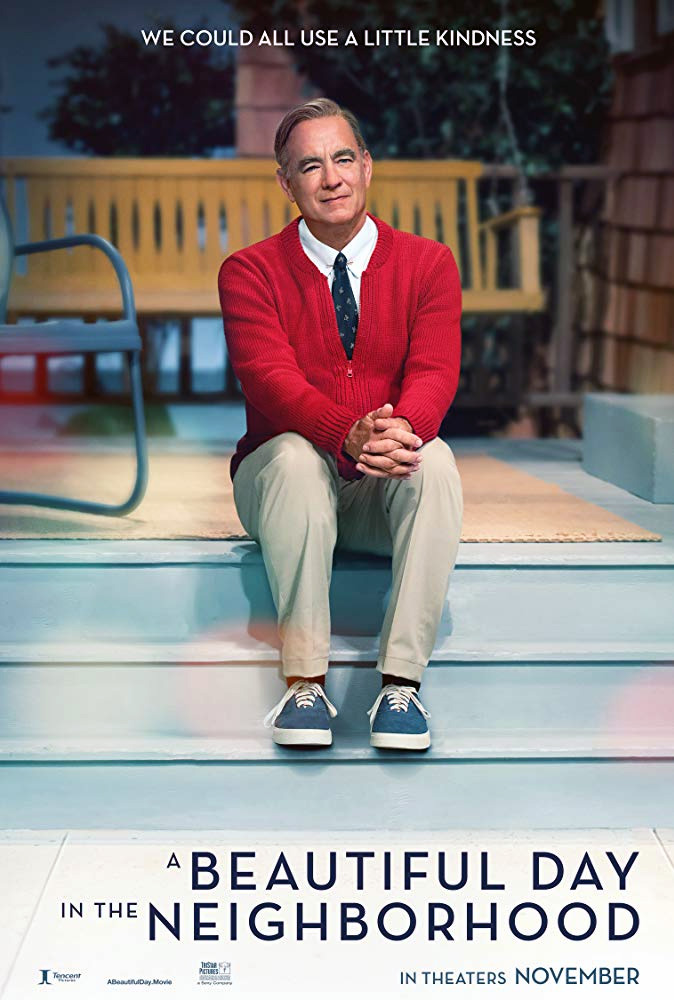
A Beautiful Day In The Neighborhood Effectively Brings Back Fred Rogers With A Career-Defining Performance From Tom Hanks


       No life is free of pain, that's one of the key messages of A Beautiful Day In The Neighborhood, a 2019 biographical drama about kindness triumphing over cynicism and how acceptance and kindness are both necessities in everyday life. Based on the real-life friendship between iconic TV figure Fred Rogers (Played by Tom Hanks), and journalist Tom Junod (Played by Matthew Rhys), the film explores important themes regarding skepticism, empathy, and kindness from strangers with Fred Rogers story being used as a device to drive those themes home to the audience. Released by Sony pictures, the film premiered at the Toronto International Film Festival on September 7, 2019, with it later receiving its official theatrical release in the United States on November 22, 2019 by Sony Pictures. The film opened to unanimous praise from critics with high marks being directed towards Tom Hank's performance, which so far has garnered a Golden Globe nomination for Best Actor with an Oscar nomination soon in the cards, as well as praise towards Rhy's performance along with the films directing and touching messages it conveys to the audience. On a financial note, the film proved to be a box office success garnering $58 million at the domestic box office, while being placed on Time's top 10 best film lists of 2019. Having seen the actual film, A Beautiful Day In The Neighborhood thrives largely off the performance of its supporting actor, along with the message the film carries.


      The plot for A Beautiful Day In The Neighborhood centers around the friendship between a beloved children's TV programmer, Fred Rogers (Tom Hanks) and a magazine writer (Matthew Rhys), whose tasked with writing a story centering around heroes. The relationship between these two individuals is where the film draws its greatest strength in terms of being emotionally powerful, as well as being fun to watch with the audience witnessing Rhy's character Lloyd's cynicism slowly fade away with the more he witness the impact that Fred Rogers influence as a TV host has on the youth, as well as himself in regards to dealing with his own personal issues. It is with the relationship between Fred Rogers and Lloyd, that the film gains both its heart and soul with their friendship being a meaningful one. The film is extremely well-acted, directed, written, beautifully shot, and well put together, ultimately making it an ideal drama that audiences can become both invested and connected with. Despite the films strong qualities in terms of it's filmmaking, the end result feels somewhat underwhelming as it's not so much about Fred Rogers, but instead is about the stranger he befriends and helps heal from their pain. To some, this will be disappointing as they will expect a film moreso about the life of Fred Rogers going in. For others, the film as well as it's story will still hit home with it's inspiring story about kindness, friendship, and healing from ones pain.


      What makes the film thrive outside of it's strong directing and writing is the main performances between the two main stars. Hanks proves to be the perfect choice for the role of Frank Rogers, showing that no one else could've nailed the part as well as he does. He possesses the same kind of warmth and mannerisms that Rogers carried along with the fact that Hanks is generally known as a nice guy off camera. Here he delivers another masterful performance, that stands as being one of his best pieces of acting yet. Matthew Rhys does a fine job playing the cynical reporter Lloyd, who balks at the idea of interviewing Mr. Rogers at first, finding the task to be a joke but ultimately grows to respect the man he's interviewing when he see's the impact he has on others including himself. Add to that, both Rhys and Hanks showcase perfect chemistry together, while providing the contrast between the two personalities. Hanks does a fantastic job of delivering a magical feel about Fred Rogers with both Lloyd and the audience wondering why Fred is such a nice person with the realization being that's just the type of person he is. Rhys plays his character as being a hurt young boy trapped inside a man's body, as he still harbors pain and anger towards his father for the way he treated his family years prior. In terms of the films supporting cast, Susan Kelechi Watson and Chris Cooper both shine as Lloyd's wife (And fan of Mr. Rogers show) and Lloyd's fragile and neglectful father. Maryann Plunkett shines as Fred's wife, Joanne Rogers despite having a minimal role compared to Hanks and Enrinco Colantani as Bill Isler, President and CEO of Family Communications whose portrayed as being an important figure in Fred's life. As a whole, the cast does an impressive job of fitting into their roles, making them both believable and convincing. The performances from the main actors along with the supporting cast go a long way in regards to bringing the story to life, as well as making the film sweet and heartwarming. Despite the strong work of the side actors, the film rests solely on the performances of Hanks and Rhys with their characters relationship carrying the film.


      In regards to the films directing, Marielle Heller does a fine job with helming the story, giving the film both a gentle and sincere feel, while letting the performances take control of the story. The scenes with Hanks and Rhys together are the strongest moments of the film with the two men carrying opposing views being placed together in a room and just chatting with a friendship growing along with Rogers character attempting to help Lloyd heal from his pain. The performances as well as the subtle touch that Heller adds to the scenes with the atmosphere, makes those moments engaging to the point where the audience can't resist looking away from the screen. The film never feels overly sentimental nor forced, but carries with it a feeling of authenticity in regards to how it presents a story revolving around acceptance and forgiveness combined with the goodwill of strangers. With key scenes, Heller restrains the music, letting the atmosphere and actors give life to the moment with the creative director carrying the same patience as Rogers in regards to getting the proper responses from those involved. On a technical note, the films cinematography gives the film a perfect feel good look and style of the story, making the film appear to be well-shot with the pacing moving the story slowly, though still making great transitions between the scenes involving the show and Lloyd's transitioning. The films score by Nate Heller beautifully blends with the films look and style, giving the movie a quality that makes it feel magical, lively, and electric while utilizing songs from the actual Mr. Rogers TV show. In regards to the films directing, Marielle Heller does a fine and worthy job of creating a story that honors the work of the legendary childrens TV show host, while making the story feel transformative to audiences.


      The films screenplay by Noah Harpster and Micah Fitzerman Blue works well as being an emotionally touching story about how the persistent kindness of strangers can make a difference in a persons life for the better, creating an experience that's ultimately life-changing. With the writing and Heller's directing, the film often feels like it has a life of its own with certain moments feeling like it's speaking directly to the audience in much the same way that Fred Roger's show spoke to young children. The film presents an interesting scenario to audiences with two ways the film can be viewed as appearing storytelling wise. The first is that the film can be look upon as a biopic with insight into the mystical world of Fred Rogers, as well as his passion for being a role model for young children, with the second outlook being that the story also focuses on the character of Lloyd, a man carrying his own personal pain and insecurities who needs healing within his inner world in order to move forward with his future without losing everything he loves. That healing process and self-reflection comes through his relationship with Fred Rogers, two men who are complete opposites yet give each other purpose. The film is less about the life of Rogers but more of a tale of how he helped to put someones life back on track. Despite that overall concept working well, it makes one question why the filmmakers chose to focus on this specific relationship as Rhy's character is presented as being a deeply flawed and almost unlikable person (Especially when he critiques Fred's approach to helping kids) in comparison to someone as extroardinary as Fred. Wouldn't it have been more ideal to explore the life of Fred Rogers such as showing his upbringing while answering questions the audience might have such as how he got his show, and why he chose to be such a humanitarian to others? While the story presented here is moving and accomplishes what it sets out to do, one can't help but wonder about the missed opportunity and answers to those questions that the film could've explored.


      Whether audiences agree with the approach that A Beautiful Day In The Neighborhood takes with it's story or left disappointed by it, there's no denying that a huge dose of heart, passion, admiration, and homage went into this film to pay tribute to a man who made it a lifelong ambition of his to make a difference in people's lives. This is a story about how broken world's can be healed, and how simple gestures and acts of kindness can change a person's outlook on life, particularly those who feel hopeless and aren't sure how to deal with their negative emotions in a positive way. The film feels like an extended episode of Mr. Rogers show with the main point being that no one is too young nor too old to be helped by someone as kind-hearted and well-spirited as Fred Rogers. A Beautiful Day In The Neighborhood might not be the film that some audiences were expecting it to be, but it still hits home with it's powerful messages along with the perfect casting of Tom Hanks in one of the most defining roles of his career. The film is unquestionably one of the best of the year, and will generate numerous award recognition for it's main star this award cycle. If one is a fan of Mr. Rogers work and want a trip down nostalgia lane that feels just right, A Beautiful Day In The Neighborhood is worth seeing. For those who are experiencing insecurities or having trouble processing harbored pain, it's a film that not only entertains but speaks them with advice on how to process those emotions, while encouraging them to remember their own childhood.

Final Verdict: For fans of the nostalgic PBS show, Tom Hanks fans, and those in need of a friend, A Beautiful Day In The Neighborhood is that friend and the film to both watch and experience.

The Irishman Masterfully Shows That Both It's Main Stars And Scorsese Still Pack A Powerful Punch In The Mobster Genre


      One of the most anticipated films of the 2019 winter moviegoing season arrives with Netflix's The Irishman, another epic crime drama from legendary Oscar Winning filmmaker Martin Scorsese, who previously helmed classics such as Taxi Driver, Raging Bull, Goodfellas, Casino, and The Wolf Of Wall Street with the film starring Robert De Niro, Joe Pesci, and Al Pacino. Based on the 2004 bestselling book I Heard You Paint Houses by Charles Brandt, the film focuses on a truck driver named Frank Sheeran (Played by Robert De Niro), who becomes a hitman associated with mobster Russell Bufalino (Played by Joe Pesci), as well as his crime family with the film also exploring his relationship with Teamster Jimmy Hoffa (Played by Al Pacino). Announced as Scorsese's next project after 2016's Silence, the film ended up becoming the most expensive one to make out of his career with a budget of $159 million along with being his longest film with a running time of 209 minutes. Despite premiering on Netflix in late November, the film received a limited theatrical release beginning on Nov 1st, 2019 with the film having its premiere at the 57th New York Film Festival. The film opened to widespread critical acclaim with praise being directed towards Scorsese's directing (Despite the pacing being significantly slower than his typical films) as well as the performances of De Niro, Pacino, and Pesci. On top of it's critical success, the film also became one of the most widely viewed Netflix movies ever garnering 26 million views, a figure comparable to Bird Box's debut. The question for those who haven't seen the film yet, is whether The Irishman lives up to the stellar reputation it's received thus far or if it's even a good Scorsese film. The answer to both questions is both a confident and enthusiastic yes, The Irishman lives up to its name as being an engrossing mob drama, that's not only well directed by Scorsese, but shows that its legendary acting trio De Niro, Pesci, and Pacino still possess the talent to command the screen with fantastic performances.


      The story for The Irishman is based upon true events and centers around real-life union and mob official Frank "The Irishman" Sheeran (Robert De Niro), while being told through a series of flashbacks. The film chronicles his friendship with mobster Russel Bufalino (Joe Pesci), while also showing his closeness with Jimmy Hoffa (Al Pacino), the President of the International Brotherhood of Teamsters who disappeared mysteriously in 1975. With the story that this film possesses, Scorsese aims to make this an epic gangster tale (With a strong possibility of it being his final one) by revisiting many of the themes from his earlier body of work such as Goodfellas and Casino in order to weave them into another classic tale, that ultimately justifies its ambitious running time. The Irishman is a story that's masterfully told and brought to life through masterful directing, stellar writing, and excellent performances from its main cast. The film combines all of Scorsese's classic filmmaking traits such as lengthy narration from the main characters, fluid cinematography, an extended running time, and graphic-gang-violence. While the film may come across as feeling too long for some viewers, its the way the story is told along with the performances from the main trio that holds it together. The films writing, pacing, and editing are tight and work well together with the films storyline covering key events in American history, while serving as the backdrop for the main characters. At it's core, the film is about an elderly mobster looking back at his early years as well as his friendships with key individuals where his loyalty becomes tested.


      One of the key elements that makes the film work so well are the performances from it's main cast. The combination of Robert De Niro, the return of Joe Pesci to the big screen after coming out of retirement, and the resurgence of Al Pacino are dynamic and properly treated as major events for the film. All three actors are not only convincing, but manage to deliver their strongest performances in years. De Niro is fantastic as Frank Sheeran with the story centered around his character. With Sheeran, Scorsese utilizes De Niro's character to deliver information to the audience regarding the films story either through his performance or the characters voice over. De Niro does his finest acting work when he plays his gangster type roles with here being no exception with his talents being displayed with playing both the young and older versions of Sheeran's character. Joe Pesci's return for the big screen is a welcomed one as he delivers his strongest performance since the days of Goodfellas and Casino. Whereas his performances in those films were more lively and energetic, Pesci excels at playing a more calm and calculated mobster type figure with the character serving as a low-key protector to Frank, while possessing a menacing side as an insincere mediator. If audiences are expecting his character to be as violent as well as getting in characters faces as he was in Goodfellas and Casino, they'll be disappointed as Pesci's character is the complete opposite but still a powerful force on the screen with his calmer yet still intimidating presence. With the character of Jimmy Hoffa, Al Pacino delivers his finest acting performance in decades with him effectively bringing the character of Jimmy Hoffa to the big screen, making him a complexed figure as well as the part of the story that reaches it's maximum potential. With Hoffa, Pacino has moments where he delivers his trademark shouty persona but also switches things up when he tones his character down, allowing his facial expressions to do the work. He does a great job portraying a Hoffa whose insistent on maintaining control of his union, while being unfazed by the dangers of his persistence as well as not heeding the warning of his friends. It's surprising that Pacino and Scorsese finally team up together for a film as the two never worked together previously with the end result not being disappointing. In terms of supporting actors, Harvey Keitel does well with his role as Angelo Bruno, despite having a shorter amount of screen time than the three main actors. His presence only adds to an already remarkable and epic line up of legendary actors reuniting with Scorsese. Ray Romano impresses and does well with his minimal role as Jimmy Hoffa's attorney Bill Buffalino, with him managing to hold his own against the rest of the cast. Despite his character getting overshadowed by the rest of the cast as the film progresses, he still manages to make the most of the time he has and does very well. One of the more understated performances is the role of Pacino's daughter played by X-Men and True Blood's Anna Paquin. Her performance as Peggy Sheeran is mostly one that's extremely soft-spoken as she only carries seven lines of dialogue with her character, yet still manages to make her role impactful with audiences in terms of being the distant child to De Niro's character, who appears to be very observant of her surroundings. As a whole, the cast puts a heavy weight on the picture in terms of it being such a stellar piece of filmmaking with the meat of the film coming from the performances of the main trio. Seeing De Niro, Pesci, and Pacino together on the big screen is a special occasion, and one that shouldn't be looked upon lightly. The moments where the trio are on the screen together are terrific with the three titans chewing up the scenery. For these guys as well as Keitel, their involvement in this film is perhaps their final ventures into the monster genre given their ages. If that's the case, one cannot think of a better exit from the genre that Scorsese provides them with The Irishman.


      While the films performances by the main actors are exceptional, it is the pure craftsmanship of Scorsese as director that glues both the acting together with the films strong script. As The Irishman shows, Scorsese is a filmmaker whose a master at his craft, delivering audiences another mobster tale that pays homage to the films of the past within the genre, while bringing it's story to life in a way that's both eye-opening and engrossing to watch. Whereas the film moves at an extremely slow pace, Scorsese keeps the audience engaged with the characters as well as the events surrounding the story while providing revelations that can be potentially shocking for the audience such as the Chicago mafia's involvement in the JFK assassination, as well as the film showing what could've (And Most likely did) happened to Jimmy Hoffa. Despite the films 209 minute running time, Scorsese keeps the film well-paced and steady, using the first half to set up the main characters with the second half developing Hoffa's real-life story and disappearance. The films visual effects are cleverly used with the de-aging of the main characters due to the story taking place over the span of several decades. What's most impressive about the CGI work is the fact that it was done through the use of an intricate camera system, that was created by ILM which has the ability to show the youthful side of the actors instantly. For the most part, the young look of the actors comes across as convincing both serving as a way of keeping continuity with the story, as well as showing the breakthrough in technology in regards to going backwards in time with the same actors without the need for recasting. The films cinematography is stunning with the film beautifully blending both the retro feel of the eras depicted in the story along with a modern day feel to it. The work that cinematographer Rodrigo Prieto accomplishes in terms of shaving off decades from its main actors, is a major achievement and one that's highly commendable. This is a well-shot film that's simply stunning to look as well as carrying the same mobster style atmosphere that Scorsese's previous films carried with them. The films soundtrack, though effective, complements both the story as well as the visual narrative perfectly. The films score manages to find a mood and feel that's able to transcend through the decades depicted in the film with Robbie Robertson delivering a masterful job. On both a directorial and technical note, Scorsese and his team give their all in terms of delivering a production that feels grand with a look that goes in line with Scorsese's previous mobster films.


      The films screenplay by Steven Zaillian is a strong effort that does a phenomenal job of establishing the main characters as well as the story, particularly the subplot involving Jimmy Hoffa's character. The film covers many themes that makes it feel more like a more reflective mobster movie in comparison to Scorsese's previous works. The film places heavy emphasis around themes of trust, loyalty, friendship, and love as they each work their way throughout the plot. The point that Scorsese appears to be making with the story is that when trust is broken and love is lost, there's nothing left as evidenced through the subplot involving Frank and his daughter played by Anna Paquin. Whereas audiences criticize Paquin's character for not having much to say in terms of dialogue, her role plays a key part in the films end message as her character provides the conscience that De Niro's didn't have as he never showed remorse for those he killed, even afterwards. Losing Patty in his life made Sheeran realize the gravitas of the situation as he reflects on it later as an elderly man looking back on his past years. The films ultimate message says that unwavering devotion to any kind of group, particularly that of the mob, only leads to corruption, violence, and loneliness in the end because it requires one to not only betray but lie to their friends and loved ones. In terms of delivering the overall message of the film, Scorsese and Zaillian present it in a way that doesn't feel forced but is conveyed through a natural progression of both the story and characters in the film. Out of all the monster films that Scorsese has directed, The Irishman is the one that focuses on self-reflection, regret, and paying for the consequences of ones actions with Frank Sheeran being the key in terms of the audience witnessing both his rise and fall as a mobster. Many of the themes in this film are ones that Scorsese used previously in his past mobster films and revisits them here, making the overall experience one that's entertaining, funny, poignant, and ultimately powerful in terms of wanting to show the consequences of living a mobster life.


       In the end, The Irishman is going to be the one mobster movie of Martin Scorsese that will divide audiences as some will find it to be long, boring, and uninspired while those who grew up loving movies like Goodfellas and Casino will appreciate the masterful skill and craftsmanship that went into telling such a rich crime story. The Irishman is a film that feels like it doesn't belong in this decade, but the fact that it exists and is so well made serves as a true testament to both the passion and dedication the cast and crew put into the production. In an era where superhero movies and remakes are dominating the current slate of movies released, it's remarkable to still see a film of this specific genre still get the greenlight. The film puts it's story and characters first with the films visual technology being used as a tool to drive the story rather than make up for it's shortcomings. The story is one that's powerfully told with a cast of veteran actors, whose primes were in the 70's and 80's era show audiences that they still have what it takes to play these parts, while possibly saying farewell to the genre that made them all iconic movie stars along with Scorsese being established as one of the world's greatest filmmakers. As for the movie itself, The Irishman is a film that lives up to the hype and delivers another powerful statement in the mob genre thanks largely to both it's legendary cast and it's director who like the main character, reflects on his own filmmaking legacy as he crafts another masterpiece on his resume. For those who are weary about watching the film due to it's extreme length, The Irishman is worth the time, the effort, and dedication to watch it as the story is engaging and the performances of De Niro, Pesci, and Pacino are exactly what you expected and hoped them to be. It's a film that's definitely worth the hype it's generated as well as being worth the 3.5 hour viewing time. Is it a perfect film? No, despite each moment feeling like it was properly utilized, the end result could've been 20 mins shorter and some of the scenes of young De Niro CGI dont fit well with the rest of the movie (Particuarly the scene where he throws the guy through the glass window and stomps him). Despite these minor faults, The Irishman remains one of if not the best film of 2019, making it a remarkable achievement for Netflix as the film is sure to receive much attention this award season while snagging potential Oscar wins for Best Picture, Best Actor for De Niro and Best Director. If this is to be the final say that De Niro, Scorsese, Pesci, Pacino, and Keitel have on the genre then it's one that provides a triumphant finish to their legacies as both legendary movie stars and filmmakers. The Irishman is a film that packs an enormous punch as a piece of entertainment, while serving as a powerful morality tale in regards to living a life of crime.

Final Verdict: For fans of Martin Scorsese and Robert De Niro, The Irishman is a must see.