Monday, June 15, 2015

When Love Wins Over Society

Tonight's marathon is a direct followup to the marathon titled: When Society Fails On Love. To give a brief recap of the theme of that marathon. That marathon centered around romances that ended with sad endings because society failed to bypass the ignorance or discrimination during their respective time periods. Those films were Terrence Malick's The New World, Romeo and Juliet 1968, West Side Story, Far From Heaven, and Ang Lee's Brokeback Mountain. In that marathon, each romance was doomed to fail because society failed to look past racial barriers or gender for acceptance. Tonight's marathon is the parallel to  that one in which each romance that's presented here mirrors the other except the ending is much happier and more emotionally satisfying. One wouldn't think that there wasn't more to add after an ending like Brokeback Mountain, but there actually is in terms of doing a reversal marathon with the same theme instituted. For tonight's marathon, we have on the following menu:

Pocahontas 1995, Lion King ll Simba's Pride 1998, A Bronx Tale 1993,  Guess Whose Coming To Dinner 1968,  and Anna and the King 1999.


Now this feels like a worthy follow up to When Society Fails On Love night. Nearly every kind of love story from the previous lineup is present here with the theme being when love prevails over societies misunderstanding culturally. Terrence Malick's The New World is parallel to the 1995 animated film Pocahontas, Romeo and Juliet 1968 is now Lion King ll Simba's Pride, West Side Story is now A Bronx Tale, Far From Heaven is now Guess Whose Coming To Dinner, and Brokeback Mountain is now Anna and the King. All these love stories are iconic in the sense that they all tested societies level of tolerance and acceptance while showing the discrimination that each couple relationship endured. The first movie of the night is the 1995 animated classic titled Pocahontas with Mel Gibson as the voice of John Smith. The film is a landmark achievement because it became the first animated film in history to tackle the theme of an interracial romance. The film centers around an English soldier named John Smith sharing a forbidden romance with the daughter of an Algonquin chief named Pocahontas. The timeline of this romance is placed during the period when English colonists invade seventeenth-century Virginia. The supporting cast is voiced by the talents of Christian Bale who was also in Terrence Malick's live action version of Pocahontas titled The New World in marathon one, Linda Hunt, and Judy Khan as Pocahontas. Whereas The New World ended with Pocahontas marrying Christian Bale's character instead of Colin Ferrall's John Smith due to the pressure placed on both of them for sharing a forbidden romance, Pocahontas uses the love of Pocahontas and John Smith to help ease the rift between the English and Native Americans and bring the two sides together like Romeo and Juliet, minus the deaths. The second movie of the lineup is the surprisingly decent direct to video sequel to Lion King titled Lion King ll: Simba's Pride. In this sequel to the Disney classic, the story focuses around the daughter of Simba and a relative of Scar sharing a forbidden romance that ends up becoming the key to a resolution of bitter feud between Simba and the relatives of Scar, uniting both sides. The sequel gets points for taking on the theme of Romeo and Juliet and not duplicating the first film but creating it's own story. It's a great parallel to the 1968 classic Romeo and Juliet directed by Franco Zefferelli. Whereas the two star crossed lovers in Romeo and Juliet end up killing themselves due to feeling their love would never be accepted by both families, Simba's daughter and Scar's relative Kovu ignore what people say and carry out with their love, forcing Simba to strengthen his relationship with his daughter and accept reality. The third movie in the marathon is the great coming of age tale called A Bronx Tale. The film stars Robert Deniro as a bus driver struggling to keep his son from growing up to become apart of a local mobster's party during the 1960's in the Bronx. While this is happening, Deniro's son calogero befriends and fall in love with a young African American girl in his neighborhood named Jane while the Italians and Blacks share strong racial tensions. There is no better parallel to West Side Story than this film with both films dealing with tensions between two groups and a love that stands right in between them. Chazz Palminteri's powerful screenplay shows a young Italian boy growing up in a rough neighborhood and having a more open mind than everyone else around him. The love prevails in Bronx Tale compared to West Side Story because the two young lovers bypass all of societies prejudices and continue to date as implied by the dialogue in the final scene of the film. The fourth movie of the marathon is the 1968 landmark classic titled Guess Whose Coming To Dinner starring Sidney Poitier, Katherine Hepburn, and Spencer Tracy. Generally considered as the film that opened the door to the theme of interracial romance, the film focuses on a liberal couple being forced to rethink their stance on race when their daughter brings home an African American fiancĂ©. Nominated for ten academy awards and winner of two including one for best actress for Katherine Hepburn, Guess Whose Coming To Dinner arrived at a time where the civil rights movement was at it's peak and change was on the horizon for America. It is the perfect follow up to Far From Heaven where Julianne Moore played a 1950's housewife who falls in love with a black man in her neighborhood after catching her husband in love with another man. That film ended with her and Dennis Haysbert's character parting ways feeling that their love can never be de to the racial tensions that are present in their neighborhood. The final scene of Guess Whose Coming To Dinner has Spencer Tracy making an epic speech about if two people really do love each other regardless of differences in skin color than nothing else should matter. It is indeed one of the most powerful speeches in film history. The fifth and final movie of the ending feels like the perfect parallel to Brokeback Mountain with Anna and the King. Starring Jodie Foster and Chow Yun Fat, the story centers around a widowed English schoolteacher  named Anna Leonowens, and the King Of Siam played by Chow Yun Fat. The two share a burning romance during the 1860's with racial tensions colliding from both the Siamese and English governments. Whereas Brokeback Mountain ended with the love failing because of discrimination getting in the way and Jake Gyllenhaal's character getting killed for being homosexual, Anna and the King ends with the two fully realizing their love for each other and the Siamese King coming to the realization that he can actually love just one woman and not need to be married to several. It is a bittersweet ending because while Jodi Foster's character decides to return to England, they share one last dance, inspiring the King's son to become a great leader that treats everyone equally.

So what is the message behind this marathon compared to When Society Fails On Love. This marathon says that love between two people can prevail if the rest of society disagrees with it, and if you really believe in that love and it is real, then life will find a way.

Our Parallels for both marathons for this evening:


Friday, June 12, 2015

Saving Your Own Existence Part 1

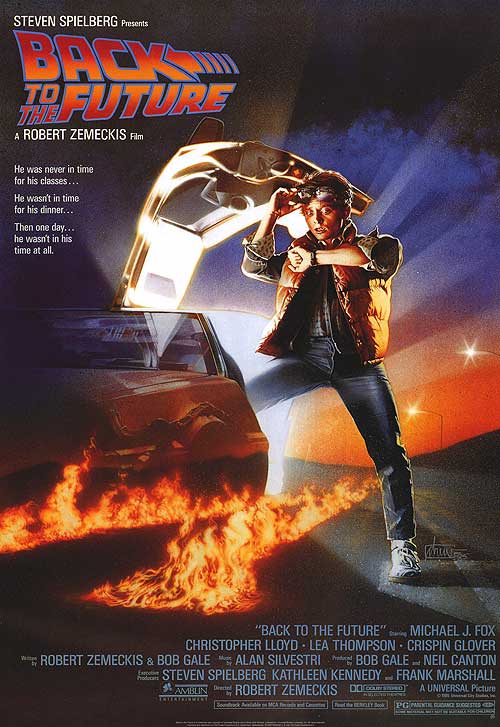
Tonight's marathon is about fighting to save ones existence whether it's thru time travel or in the future with some of the greatest and most iconic scfi fantasy trilogies ever created. This marathon is designed as a way to build towards the release of Terminator Genisys as well as to mix the interweaving storylines to cover all five grand trilogies in such a short amount of time. The themes that bind these movies together are changing one's future, war that's on the horizon, acts of rebellion and defiance against the system, as well as protecting and uncovering persons that turn out to be pivotal figures for the safety of the human race. We have on our menu for this evening:


Back To The Future 1985, Star Wars Episode 1 The Phantom Menace 1999, XMEN 2000, The Matrix 1999, and The Terminator 1984


Probably one of the most unique and oddest movie marathon combinations ever paired together but the ongoing theme that runs rampant through each of the films and executed in their own different ways is the fight to save one's existence. This is the story arc and theme that binds them all together as the theme of war gets louder with each film. To begin with a lighthearted film like Back To The Future and end with a dark futuristic thriller like Terminator shows a great contrast and progression in the story arc of saving ones's own existence. The theme of time travel is also introduced in Back To The Future with a young Michael J Fox going back 30 years in the past thanks to his friend Doc Brown played by Christopher Lloyd on a mission to ensure that his high-school-age parents meet in order to preserve his own existence. Nominated for 4 academy awards and winner of one, as well as the unexpected box office smash of 1985, Back To The Future introduces the device of time travel that comes back full circle in The Terminator. Changing one's own future is also a theme that Terminator plays off of with a soldier from the future named Kyle Reese going back through time to protect a young Sarah Connor whose the mother of the savior of the resistance in a futuristic Nativity Story angle. The second movie of the lineup is the highly controversial and criticized first installment of the Star Wars franchise titled Star Wars Episode 1 The Phantom Menace. The first entry in the Star Wars prequels places two Jedi Knights named Obi Wan Kenobi and Qui Gon Jin on a mission to protect the queen of Naboo from the Trade Federation that wishes to take control of the galaxy and initiate war through the use of the droid army. While escorting the queen to safety, her ship experiences damage forcing them to land on a deserted planet called Tatooine. While searching for repair parts for the ship, they come across a young boy named Anakin Skywalker who becomes their savior for winning a Pod Race that allows them to repair their ship with the prize money. The Jedi Master Qui Gon slowly realizes that the boy is more talented than he appears and may be the Jedi master which the prophecy says will bring balance to the force. The Phantom Menace introduces the theme of protecting an important figure as well as the emergence of someone who becomes a savior of the galaxy. The antagonist Darth Maul can be summed up as the Terminator in this film as his mission is to hunt down the location of the rebels protecting Queen Amidala. The third movie of the marathon is Bryan Singer's first installment in his popular comic book trilogy titled XMEN. The story centers around two young mutants who attend a school for gifted mutants run by Professor X in a quest to better understand their mutant powers. They soon discover that the residents in the school form a superhero team called the XMEN who fight to oppose a terrorist organization with similar powers run by their mutant leader Magneto. XMEN is a story about a group of mutants fighting for their on survival and existence with the enemy being regular humans who fear the mutants. The character of Wolverine played by Hugh Jackson protects the mutant Rogue played by Anna Paquin from becoming captive to Magneto's misguided plan to turn all humans into mutants, but is actually destroying them. The 1999 Wachowski Brothers scfi classic titled The Matrix centers around a computer hacker named Neo who gets a mysterious message on his computer about joining a mysterious rebel gang, learning about his true purpose, and the part he plays in a war against those who control the system as well as machines called The Sentinals. Starring Keanu Reeves, Laurence Fishburne, Carrie Anne Moss, and Hugo Weaving, The Matrix parallels The Terminator as well as Episode 1 and XMEN in the form of a rebellion taking place between man and machine, the republic vs the trade federation, and human vs mutants vs mutant terrorist organization. The films also emphasize a character in each film that's represented as the chosen one or someone with great importance to the rebellions cause such as Senator Amidala and Anakin Skywalker, Wolverine and Rogue, Neo, and Sarah Connor in Terminator. The Terminator marks the fifth and final movie of the night for the theme of saving your own existence with Arnold Schwarzeneggar and James Cameron teaming up as lead actor and director in one of the greatest Science Fiction stories ever told. The Terminator centers around a soldier from the future named Kyle Reese being sent back through time to protect a young woman named Sarah Connor whose revealed to be the mother of John Connor, the leader of the resistance and savior of humanity. A great parallel between The first Terminator and The Matrix is that both are essentially love stories hiding within the plots of each film. The character of Kyle Reese reveals near the end of Terminator that he volunteered to come across time for Sarah because he loved her, and Trinity admitted that the Oracle told her that the person who was the chosen one would be the man she would fall in love with. The plot device of using time travel that was introduced in Back To The Future comes back full circle with this film as the rebel forces in the war with the machines sent a soldier through time to protect the mother of John Connor from the killer cyborg called The Terminator. The Terminator and Matrix share many similarities from the war against the machines to members of the rebel forces like Kyle and Trinity going back through time or into the real world to protect the people that are not only heroes but those they secretly love.

So what is the message behind all of these films when they are combined? When all of these movies are put together in one big lineup, the message ultimately says that you must fight to preserve your own existence and the existence of everyone else around you. If there is a war that's coming, you must do everything in your power to fight it in order to survive. Good men have great mentors such as Doc Brown, Qui Gon Jin, Professor X, Morpheus, and John Connor to mentor them into prevailing when the odds are stacked against them.

Our heroes and villains for this evening:


Monday, June 8, 2015

When A Girl Fights For Acceptance

Tonight's marathon is different from the typical movie marathons. Whereas most movie marathons cater to the theme of when a man does this or when a man does that, this marathon specifically is about emotional and physical empowerment of women from the standpoint of them fighting to prove themselves as being capable of fulfilling whatever tasks given to them, and seeking approval from the men they look up to as a father figures or people they can trust. This lineup is inspirational, exciting, funny, uplifting, and ultimately carries with it a great message for women to always fight for what they want and never give up. For tonight's marathon, we have on the menu:

The Next Karate Kid 1994, Girlfight 2000, GI Jane 1997, Mulan 1998, and Million Dollar Baby 2004


With the combination of all five of these movies together, a lot is being said tonight about the fight for women's acceptance and proving that they are just as capable of being as tough and powerful as men. Nearly all of these story arcs deal with a young girl wanting to prove herself to her masters but also wants to be accepted and fight for her dreams. Perhaps the most striking female characters of the evening are the ones played by Hilary Swank and Demi Moore. Hilary Swank's first starring role was in the fourth sequel to The 1984 classic titled The Karate Kid, and Clint Eastwood's Million Dollar Baby brought Swank her second Oscar win after her triumphant performance in 1999's Boys Don't Cry. Beginning with The Next Karate Kid, Swank is introduced to audiences as a troubled teenage girl who befriends an old karate master named Mr. Miyagi, and begins to learn to become a better person while fending off her High School male bullies. While not the classic film that the first Karate Kid turned out to be in pop culture terms, The Next Karate Kid works perfectly as the first film of the marathon by introducing a younger and more troubled adolescent version of Hilary Swank. The second movie of the lineup is the 2000 critically acclaimed boxing drama titled Girlfight starring Michelle Rodriguez in her breakout role. In this tale of a young girl fighting for what she wants, Rodriguez plays a young girl named Diana in a troubled neighborhood who trains as a boxer behind her fathers back and achieves a status that allows other females to follow suit in their quest to become boxers themselves. Essentially, this is the female version of Rocky with a young Michelle Rodriguez telling herself that she is worth more than what people say, and decides to go out and seek her worth. The third film in the marathon is Ridley Scott's cult classic feminist film titled GI Jane starring Viggo Mortensen, Demi Moore, Jim Cazievel, and Anne Bancroft. In this film, Demi Moore stars as the first female enlisting for the Combat Reconnaissance Team after being enrolled by a female senator played by Anne Bancroft. Moore's character quickly realizes that her training is not going to be easy and everyone practically expects her to fail. Gi Jane is the third film in Ridley Scott's resume like Alien and Thelma and Louise where he has a female character leading the stories of his films, and presenting them as being strong willed, independent, and fearless. The fourth film is the 1998 Disney classic Mulan, centering around a 17th century Chinese girl named Mulan who joins the Chinese military disguised as a man in the place of her father to fight off the Hans army. Upon seeing that her father is far too old to be going to battle, she takes his place and begins her path to glory with the help of a friendly dragon named Mushu. Out of the films in the marathon this far, The Next Karate Kid, Girlfight and Mulan all center around a girl who not only fights for her dreams, but seeks the approval of the father figure in her life whether its her real dad or her karate master. The fifth film of the marathon brings it all to a stunning conclusion with Hilary Swank returning to form as a boxer in Clint Eastwood's boxing epic drama titled Million Dollar Baby. With the combination of Eastwood, Swank, and Morgan Freeman as the dynamic trio in this epic tale, Eastwood centers the movie around a young woman whose determined to prove herself towards becoming a professional with the help of her hardened boxing trainer played by Eastwood. Although reluctant to train her at first, Eastwood see's the potential in the young girl and takes her under his wing, not only creating an apprentice but also someone he looks up to as a daughter of his own blood. The emotions pouring through the marathon all come to a stunning conclusion with the ending of Million Dollar Baby as well as the message that a woman should always fight for what she wants whether it's a fight against a bully, a fight in the ring, or being in a army that openly discriminated against you.
 
So what are all of these movies trying to say ultimately? The message of this lineup when you put all the movies together is to never underestimate a girl's full potential or automatically assume that just because they are female they can't do jobs that men are capable of doing nor be as tough as them. The Next Karate Kid and Girlfight say that you are worth more than what you presume yourself to be, and you should always fight for what you want. Gi Jane says that a woman can be just as tough and capable of carrying out tasks that society presumes only a man can accomplish, Mulan says that family ultimately comes first and that discriminating against women is just plain stupid and intelligence and strong will can overcome ignorance. Million Dollar Baby's message is to always believe in yourself and strive for your dreams. The people who you assume don't care about you might do so more than you think. Never give up.
 
Our heroines for this evening:


Friday, June 5, 2015

When Monsters Roam Free

Tonight's marathon is all about witnessing some of the scariest and most terrifying monsters roaming free in both tropical and heavily populated locations. These animals range anywhere from giant Anacondas to killer gorillas to a giant ape, to dinosaurs on an abandon island and finally to a massive lizard like dragon roaming free in San Francisco. This marathon pays homage to the great monster and B movies of the last 20 years and also builds up the threat with each creature getting bigger and more dangerous. For tonight's terrifying and exciting marathon, we have on the menu:


Anaconda 1997, Congo 1995, King Kong 2005, The Lost World: Jurassic Park 1997, and Godzilla 2014


Several keywords that best describe this lineup is suspenseful, terrifying, loud, exciting, action-packed, brilliant, engaging, and ultimately it's the perfect prelude into the release of Jurassic World. Starting small with giant snakes roaming free in the tropical landscape and building up to Godzilla is a great transformation from where the marathon begins. The movies all play a similar formula with corporate greed or poachers wanting to obtain either the creatures or the items their protecting for personal gain. The first movie Anaconda starring Jennifer Lopez, Ice Cube, and Jon Voight centers around a documentary filmmaking team who stumble across a shipwreck and rescue a stranded hunter played by Voight. Little does the crew know that this insane hunter has alternate plans of his own and takes the entire National Geographic film crew hostage in his quest to capture a live Anaconda that's worth a million dollars. Anaconda has become a cult classic since it's release spawning two sequels and earning a status that places it among the most enjoyable bad movies ever made. The second movie in the lineup is the 1995 blockbuster thriller titled Congo starring Ernie Hudson and Tim Curry. Based on Michael Crichton's best selling novel and also the writer behind Jurassic Park and The Lost World, Congo centers around killer gorillas in Africa that hunt a team of explorers sent to investigate the disappearance of the original team under suspicious circumstances. Like Anaconda, Congo is another case of a film that's cheesy entertainment and works as a cult classic because of the absurdity of it all. Neither films got good marks from critics or audiences but they work because of their entertainment value within all the cheese. The third film of the lineup is the critically acclaimed remake of the 1933 original. Peter Jackson's King Kong centers around a film crew going on an expedition to Skull Island to make a movie but instead find themselves encountering a hostile tribe, extinct dinosaurs mysteriously living on the island, and a giant gorilla named King Kong.  Jack Black stars as Carl Denham, the arrogant hollywood director who cons the cast and crew into going on the expedition to Skull Island. Nominated for four academy awards, King Kong was a box office and critical success upon it's release in December 2005, setting a standard for hollywood remakes showing they too can be great films. Why Andy Serkis wasn't nominated for his phenomenal performance as Kong and Naomi Watts as Ann Darrow is one of the big mysteries in the history of the academy awards. The fourth film in the lineup is the Steven Spielberg box office smash sequel to the 1993 classic Jurassic Park. The Lost World: Jurassic Park stars Jeff Goldblum as Dr. Ian Malcom from the first movie, returning to lead a rescue mission to save his girlfriend on a second island full of dinosaurs with her being played by Julianne Moore. Whereas the research team led by Dr. Malcom has no intentions of bringing the dinosaurs back to the island, the second team that arrives has plans to capture and take the dinosaurs back to the mainland after former head of InGen company John Hammond loses control of it to his slimy nephew. Lost World opened to box office records making a stunning 92 million it's first weekend but suffered from reviews less favorable than those of the original. Although the film drew criticism for large number of plot holes and poor character motivations, the visual effects earned itself an academy award nomination for best visual effects. The fifth and final movie in the lineup is the 2014 blockbuster remake Godzilla. This film places Godzilla against two other powerful creatures as they make their way across the world from Japan to San Francisco, leaving a path of chaos and destruction along the way. Unlike the rest of the creatures in the previous films, the ones in Godzilla pose the greatest threat to mankind and represent societies ignorance and scientific arrogance in creating such dangerous creatures.

So what do all of these movies say when all are put together for an exciting evening. The message basically says that some animals are not to be messed with or resurrected. Some expeditions should not be carried out and that the greed of companies like InGen in Lost World can put mankind's existence in jeopardy. There is a reason why Anacondas are in locations so far away from civilization, why killer Gorillas in Congo are not to be messed with, why islands like Skull Island and Site B from King Kong and Lost World should never be visited, and why science should be better understood to avoid the creation of monsters like Godzilla.